Lifestyle tool
Taoism and Tea Culture
Tea belongs to a broad cultural history. The Smithsonian's Tea Culture in China describes tea as part of hospitality, daily life, and the arts. Here we explore a modern way to relate brewing to Taoist ideas, rather than trace every tea custom to Taoism.
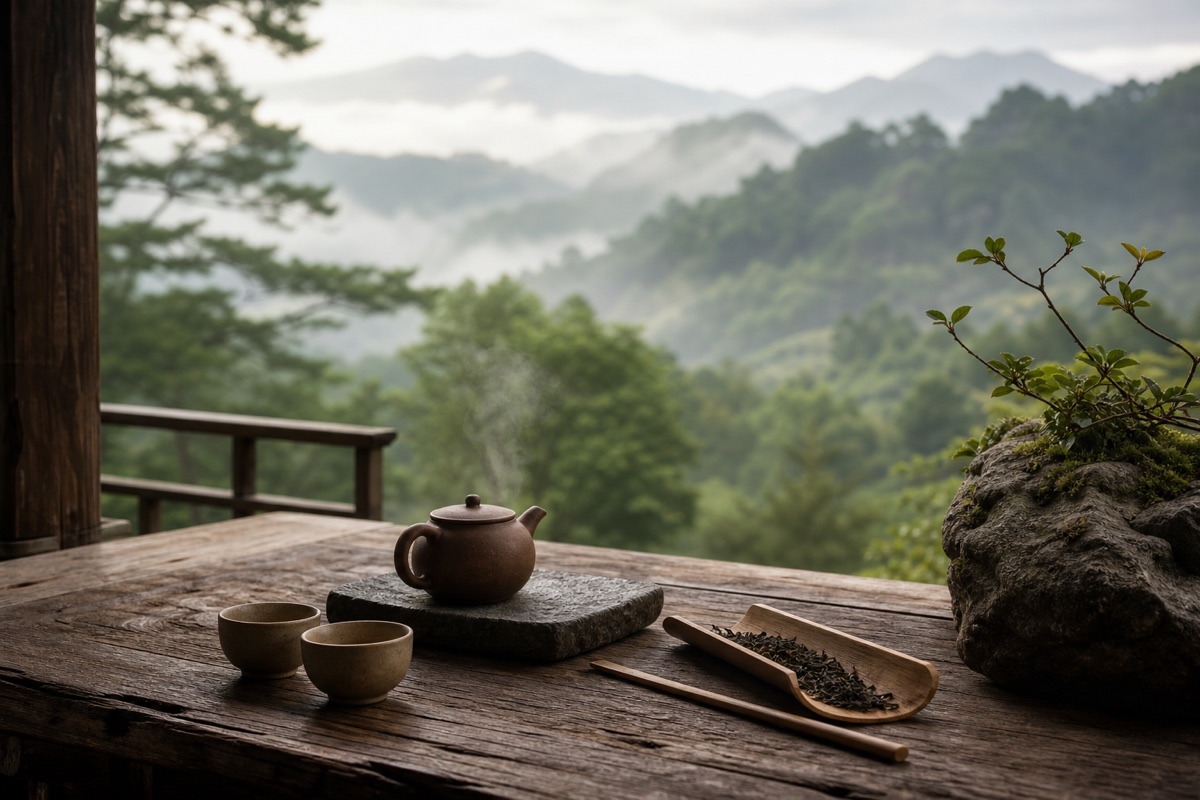
What effect did Taoism have on tea?
The sources linked here do not establish a single Taoist origin for Chinese tea customs. They support a distinction: tea has its own social and material history, while Taoist texts offer ideas that a modern reader may bring to brewing.
Our comparison draws on naturalness and nonaction, discussed in the Stanford Encyclopedia of Philosophy entry on Laozi. The following connections are TaoTrails' interpretation, not evidence of a historical line of influence or a prescribed religious ceremony:
- Naturalness: good water, seasonal awareness, and sensitivity to the character of a particular leaf matter more than unnecessary display.
- Simplicity: a modest pot and cup can be enough. Restraint keeps attention on taste, aroma, and company.
- Responsive action: brewing is adjusted to the tea in front of you. This resembles the Taoist ideal of acting in accord with circumstances rather than through strain.
- Quiet attention: preparing and drinking tea creates a small pause in which subtle changes become easier to notice.
How tea connects back to Taoist ideas
If the ideas on this page feel abstract, go back to What is Taoism? and read the sections on the Tao and wu wei. For our modern comparison, brewing offers an example of adjusting to circumstances. A brewer notices heat, timing, leaf shape, and mood, then responds. That is closer to responsive action than to rigid control.
Readers who want the textual side of that mindset can continue to the Tao Te Ching guide, for a suggested first reading session and an introduction to differing interpretations.
Tea, mountains, and Taoist places
If you are offered tea during a visit, ask your host about its local meaning rather than assume it is a formal religious ritual. Hospitality and religious practice may share a setting without being the same activity.
If you visit a religious site, follow the host's lead, handle vessels carefully, and avoid assuming that every tea service has hidden symbolism. Our Taoist temple etiquette guide covers the broader respectful-visit basics, while the sacred mountains guide introduces the landscapes associated with Taoist history.
A simple Taoist-inspired way to drink tea
This is an optional exercise devised for this guide, not a traditional Taoist ritual. The timer offers starting points; follow your tea supplier's instructions and adjust to taste.
- Choose one tea and a simple vessel rather than building an elaborate setup.
- Notice the dry leaf, the temperature of the water, and the aroma before tasting.
- Use the suggested timer as a starting point, then respond to the actual infusion.
- Drink without rushing to label the experience as good or bad.
- Adjust the next infusion gently—shorter, longer, cooler, or hotter—and notice what changes.
Mindful first infusion
Where to continue
To understand the ideas behind naturalness and responsive action, begin with What is Taoism? and then read the Tao Te Ching guide. Tea is best treated here as a practical doorway into those ideas, not as a shortcut to mastering them. If you want the place-based side of the same world, continue to the sacred mountains guide.